From sport business to education expert
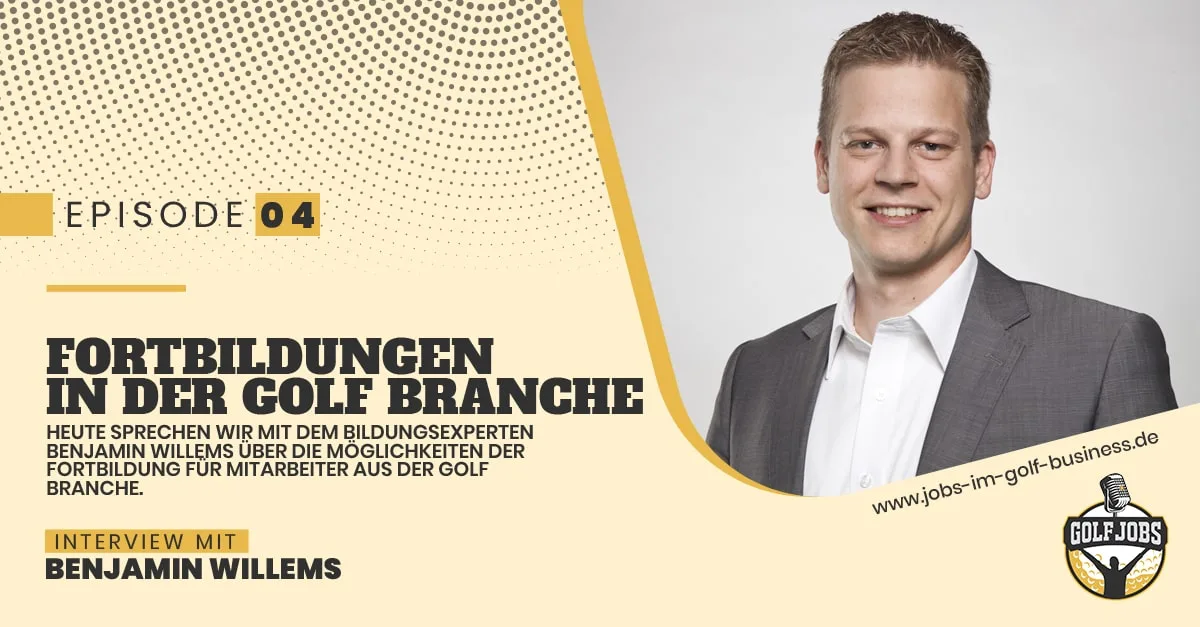
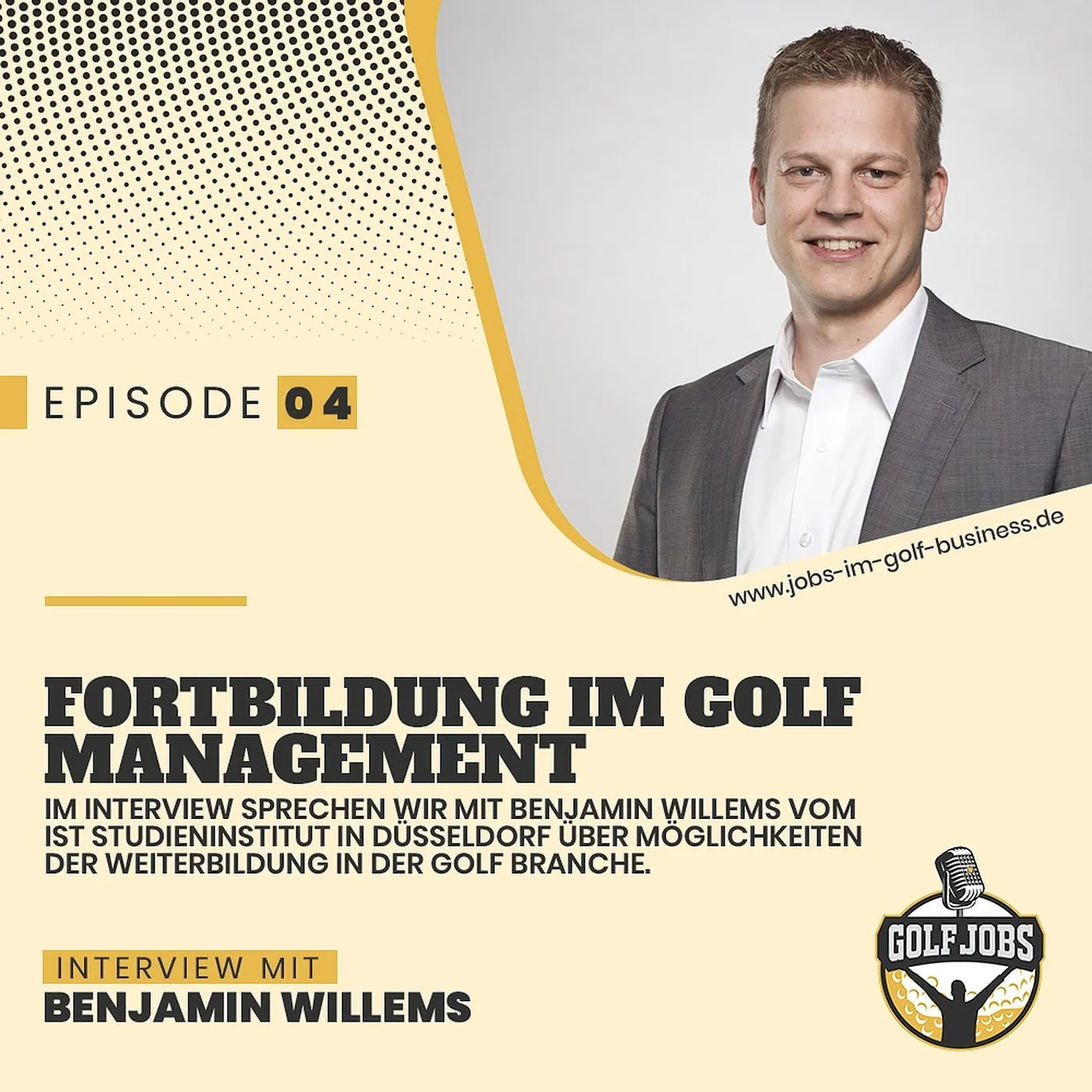
Benjamin Willems is a graduate sports scientist and, as he says, has worked in sport for as long as he can remember. At three and a half he kicked a ball for the first time, in his school days worked for newspaper and radio and studied sports science with a focus on management and economics at the German Sport University Cologne. Before the IST he worked in sports marketing, among others in football for large and small agencies, always as an intermediary between business and sport. Already during his studies he came into contact with the topic of education for the first time, via the leadership academy of the German Sports Confederation. For around ten years he has been at the IST and is now head of sales in the sport division.
Two routes led him to golf. Professionally there were first points of contact through project work in his studies and later through the agency network, in which an early Platzreife cannot hurt. He reached for the club himself only late, after what felt like ten taster rounds he eventually felt like really playing a hole, the Platzreife he even did only in the year before the interview. His understanding of the role he sums up with an anecdote: Jochen A. Rothaus, today sponsoring director at Bayer Leverkusen, used to sell films and, asked what he had to do with football or ice hockey, answered that he didn't even know the rules but he could sell. That is exactly how Willems sees the sale of education offers in golf: being able to listen and sell counts more than the golf-specific.
What is the IST?
The IST is a family business, founded by Dr Hans Ulrich, whose wife Dr Kathrin Gessner Ulrich is today the managing director. It all started in a garage, with study booklets on sport, leisure and tourism management for a group of job seekers. More than 30 years later it has become a distance-learning specialist. At the latest since Corona, Willems hardly has to explain the term distance learning any more, everyone knows homeschooling. At the IST it runs very digitally, with videos from in-house TV studios, supplemented by in-person phases and webinars. The abbreviation comes from the original name Institut für Sport und Touristik, today people speak of the IST study institute. In 2013 its own university was added. In total the IST covers five divisions: tourism and gastronomy, fitness and wellness, event and media as well as the sport division, to which the sub-discipline golf belongs. How strongly the model has grown is shown by one figure: when Willems started there were 64 employees, by now there are almost 150.
Why further training is becoming ever more important
Since golf became big in Germany almost three decades ago, the industry has been becoming ever more professional. With it the demands on well-qualified staff rise, and accordingly a market of its own for education offers has arisen. Further training tends to bring not only a higher salary but also opens access to bigger tasks and new professions. It is exactly here that Willems sees the role of the IST, which works closely with associations such as the GVD, GMVD and BVGA and is in exchange with the DGV.
The four stages of golf further training
Willems explains the education concept as a kind of bus journey: you get on where it fits your own situation and get off again where the goal is reached.
Golf secretary
The first stage is the golf secretary, a six-month further training. Here you learn everything to be able to jump in at the deep end at the facility: stand at reception, greet guests, answer questions and get into the industry. Ideal as a get-to-know-you internship or for the first months of a dual study programme.
Bachelor in Sport Business Management
The second building block is the dual bachelor's degree in Sport Business Management. It consists half of sports economics and half of general management, so effectively half a business administration degree. The golf facility takes over the operational part over three and a half years, the IST the university part.
Golf operations manager
Towards the end of the studies stands the elective module to become a golf operations manager, which can also be chosen separately from the university as pure further training. It conveys deeper know-how to, figuratively speaking, move from reception into the back office and take on more responsible tasks.
Master
For everyone who wants to go a step further afterwards, a master's can be added, especially for those who want to grow into the next leadership level at the golf facility.
Which further training suits whom
- Golf secretary: six months, ideal for dipping in and for the entry at reception
- Bachelor in Sport Business Management: dual, three and a half years, half sports economics and half management
- Golf operations manager: deeper qualification for the step from reception into the back office
- Master: for the path into the next leadership level
- Entry flexible: you get on the bus where it fits your own situation
The dual study programme at the golf facility
Particularly in demand is the model of training a young person directly at the facility via the dual study programme. Over 50 golf facilities use it by now, in October before the interview twelve new dual students started at golf facilities, per year there are around 40 starters, partly also as a work-accompanying part-time degree. The demand is so great that the IST cannot serve between 15 and 25 facilities a year, because no suitable match with a candidate comes about. Via the in-house job board joborama.de, 40 positions were open at the October start, 15 of them at golf facilities. For the classic further trainings golf secretary and golf operations manager, together there are 40 to 60 registrations a year.
I don't even know the rules, but I can sell. It's exactly the same in golf: listening and selling counts more than the golf-specific.
How the IST ticks
Anyone considering a dual route in sport benefits from who they talk to on the provider side. In sales Willems moves with great freedom and responsibility, every day is different, from designing a public-relations strategy for a new course to the personal support of prospects. The team is young, highly service-oriented and deliberately does not work to hard sales targets, because service is only genuine when you are also allowed to say "no" sometimes. Instead of a call-centre machinery, people with professional experience in sport sit on the phone, accompanying prospects and students a little into the market. It is exactly this, says Willems, that is the real capital: not processing, but genuine advice.
For facilities that work with dual students he has a clear note. Anyone who sees young people only as cheap labour will not be happy with it. Anyone who actively supports them in their training gains a real professional in the medium term who understands the company.
From an employer's to an employee's market
Interesting is Willems' view of the job market. Ten years ago it was a clear employer's market, there were enough applicants for every position. That turned into an employee's market, because golf facilities are usually not in the city centre but in the countryside and don't automatically appeal to young people. The shortage of skilled workers became noticeable. With the first lockdown an abrupt change came again, towards a war of talents, accompanied by great uncertainty and postponed new hires.
At the same time the expectations of young applicants have changed. Anyone who constantly hears about the shortage of skilled workers is socialised differently than a generation that grew up with high unemployment figures. The topic of work-life balance quickly meets friction in traditional decision structures, as you find them at some golf facilities. Willems' appeal goes to both sides: employers should view applications more favourably and accept that times have changed, and young people should not change employer after three months as soon as something is not to their liking. Pleasingly: the uncertainty hardly affects the dual students, the registration figures for the winter semester even exceeded the targets.
His critical view of the golf industry
Because Willems comes from olympic sport, he automatically compares. Golf has developed strongly in ten years, the dusty, stuffy image only applies to very traditional facilities. Nevertheless he does not spare criticism: in no other sub-industry of sport is so much that is questionable presented so positively. He wishes that golf named problems more openly and solved them together. In the cooperation of associations and education providers too he sees room upwards, a joint body for education offers has so far not come about. The education demand in golf is changing, new products are being asked for.
Conclusion
The golf industry is becoming more professional, and with it the value of sound further training grows. From the short golf-secretary course through the dual study programme to the master's, there is a suitable entry for every goal. The dual model in particular is attractive for facilities that want to grow their own new blood, and for young people a realistic route into a varied sports market. What is decisive is that both sides approach each other.