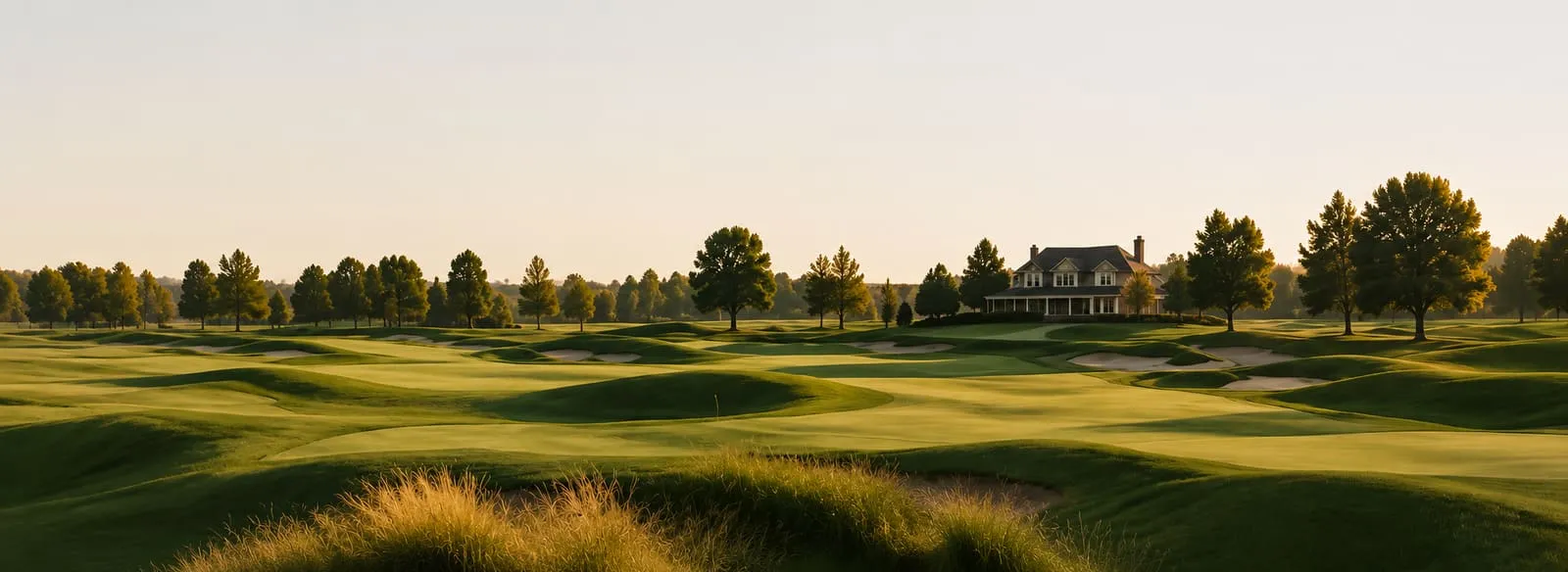
Golf is often spoken about romantically, about etiquette, tradition and well-kept greens. From an investor's view, however, a golf facility is above all one thing: an operational business on a large piece of land. And it is exactly this dual character that makes the topic exciting and tricky at the same time. You never buy only square metres, you always also buy an organisation that keeps these square metres playable.
I regularly get the question of whether getting in is worthwhile. There is no blanket answer. What there is, is a sober look at the decisive factors: the operating model, the value drivers and the process from the first conversation to the handover. Anyone who has understood that can assess themselves whether a concrete property suits them.
The essentials up front
- Golf is a long-term asset: substance value plus business, not a yield object for quick money.
- The operating model decides how much work, risk and return lie with you.
- Valuation is done via location, substance, member base and cash flow, not via glossy looks.
- The due diligence is special with golf, because soil, water rights and maintenance condition play in.
- Golf real estate at the course can be a value lever of its own, with its own risks.
Golf as an investment: opportunities, risks, a long breath
Let's start with the sober span. On the opportunity side stands a scarce good: in Germany there are only around 700 golf facilities, and new ones barely arise, because permit, land and construction are demanding. Anyone who holds an existing, well-located facility sits on a substance value that cannot be multiplied at will. Add a recurring cash flow from membership fees that is more plannable than pure guest business.
On the risk side stands the operation itself. A golf facility is staff- and capital-intensive. Greenkeeping, machines, irrigation, clubhouse, food and beverage, all of that costs money whether the sun shines or not. The German market barely grows, in some years only by a fraction of a percent, and the industry continually loses full members through age. That is not a detail but the core of every calculation. Anyone who does not keep the member base stable loses the most important revenue pillar.
The decisive point is the time horizon. A golf facility matures like a good wine, the trees grow, the small ecosystem stabilises, the brand establishes itself in the region. This value arises over years, not over quarters. Anyone with a short breath is in the wrong place here.
Operating models: who carries work, risk and return?
The operating model is the most important lever for an investor. It decides how close you sit to the operational business and where risk and return land. There are four basic models you should know.
Owner-operated
You own the facility and run it yourself, with your own staff and your own management. Here opportunity and risk lie fully with you. You steer maintenance condition, prices and investments directly and keep the entire return, but you also carry every bad summer and every repair alone. This model fits if you want to get in operationally deep or have an experienced management team to hand.
Lease
You own the land and facility and lease the operation to a tenant who operates at their own risk. You get a plannable lease but have little direct influence on the day-to-day. The advantage is the calm, real-estate-like earnings situation. The catch: a weak tenant can let the substance decay, and it is exactly the substance that is your value. That is why hard rules on maintenance condition, upkeep and investments belong in a lease contract.
Management contract
Ownership stays with you, the running is taken over by an external operator for a fee, often with a performance-related component. Unlike with the lease, you continue to carry the entrepreneurial risk but keep the return and get professionals at the wheel. This is the typical route for investors who bring capital but no industry experience. The quality stands and falls with the contract: anyone who sets incentives wrongly gets short-term numbers instead of long-term substance care.
Member and cooperative model
Here the facility belongs wholly or partly to the members, for example via a club, a cooperative or an operating company with an attached club. For a classic capital investor this is rarely the entry, but it is important to understand because many German facilities are constituted this way. The construction binds members closely but can slow decisions if a volunteer board leads without professional management.
Valuation: what the value of a facility is based on
Valuing a golf facility is more demanding than a pure yield object, because several values come together: the land value, the buildings and the ongoing business. Four factors weigh particularly heavily.
Location. Golf is a local business. A facility usually draws its members from the nearer surroundings, often the great majority live within twenty kilometres. Decisive are therefore population, purchasing power and golf penetration in the catchment area as well as accessibility. A beautiful facility without people around it stays difficult.
Substance. Here counts what you don't see straight away. How is the maintenance condition of the greens really, how old are irrigation and drainage, in what state are clubhouse and machine fleet, are there secured water rights. A neglected course is overlooked at first glance but later costs six-figure sums for renovation. How strongly construction and architecture shape the long-term value you can read under golf course construction and architecture.
Member base. The base is the lifeline. More important than the pure number is the structure: how old are the members, how many come up behind, how high is the fluctuation, how many are remote members. No facility can be maintained from a remote membership, because this fee brings money but no life onto the course. An ageing base without new blood is a warning sign you have to reflect in the valuation.
Cash flow. In the end, what comes in recurringly counts. Fees are the most plannable pillar, plus green fees, range, pro shop, food and beverage, events and trend formats. Look at how stable these flows were over several years and how dependent the facility is on individual sources or individual big customers.
Buying and selling process: due diligence in outline
The process resembles other company purchases but has golf-typical peculiarities. Roughly, the steps run like this:
- Scoping and a first picture. First conversations, rough key data, a confidentiality agreement before numbers flow.
- Letter of intent. A letter of intent records price expectation, structure and timeline non-bindingly.
- Due diligence. The actual in-depth examination, commercial, legal, technical.
- Contract and handover. Purchase contract, transfer of contracts and staff, an orderly handover to the new management.
The due diligence becomes golf-specific above all at these points: the maintenance and renovation backlog on the course, the water and irrigation rights, the condition of the machine fleet, the existing lease, catering and staff contracts, the member base including advance payments and long-term playing rights, as well as planning-law questions such as approved but unbuilt holes. Such playing rights with a one-off payment may have been collected in the past and are then an obligation you buy along, without fresh money coming in for it.
Golf real estate: living at the course
A value lever of its own is real estate around the facility. The view of a well-kept course is a sellable good, and living at the golf course is a segment of its own in many regions. For an investor that can mean two things: an additional business field alongside the playing operation and a way to finance parts of a project through real-estate proceeds.
As tempting as that sounds, it brings its own risks. Residential construction at the course needs planning law, it changes the character of the facility, and it couples two very different businesses. A property sells once, the golf operation has to run every day. Anyone who mixes both should cleanly separate which part carries which return and which risk. As an additional building block this can lift the value of a project considerably. As the main argument for a golf investment it is rarely any good.
Classification instead of investment advice
I am not selling you any yield promises here, and I deliberately name no figures that are supposed to apply to your concrete facility. Every property is different, and value arises from the interplay of location, substance, members and operation. What I can give you is the grid with which you examine an offer yourself.
If you are seriously thinking about a golf investment, bring professionals on board: an industry-experienced advisor for the operational side, a lawyer for the contracts and a surveyor for soil and substance. That is not an admission of uncertainty but part of a professional process.
Frequently asked questions
Is a golf facility worthwhile as an investment?
That depends on the property, the model and above all the time horizon. Golf is a long-term asset with substance value and recurring cash flow, but no vehicle for quick yield. Anyone who brings patience, capital and good management has better cards than someone who expects a double-digit annual return. A blanket answer would be unserious.
Which operating model is the best?
There is no best model, only a fitting one. If you want calm and plannable earnings, leasing is obvious. If you want to keep return and control but not run it yourself, the management contract is often the way. If you want to get in fully, owner-operation. What is decisive is how much risk and work you want to carry.
How is the value of a golf facility determined?
Via the interplay of land value, building substance and ongoing operation. In practice, location, maintenance and construction condition, structure of the member base and the stability of the cash flow weigh most heavily. A single good year says little, the value shows over a whole cycle.
What is particularly important in the due diligence?
The golf-typical items: maintenance and renovation backlog, water and irrigation rights, condition of the machine fleet, existing lease and staff contracts as well as long-term playing rights and advance payments you take over as an obligation. These points are rarely in the brochure and nevertheless decide the real price.