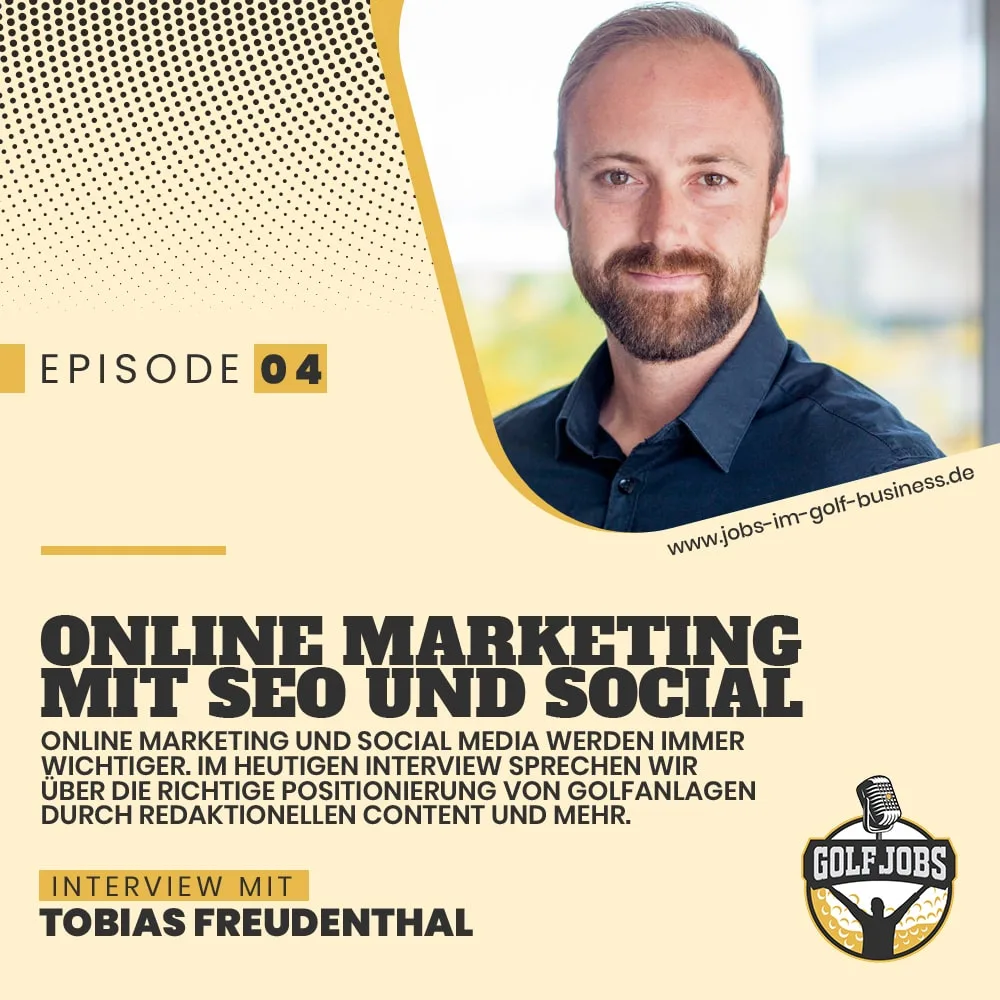
From squash pro to golf marketer
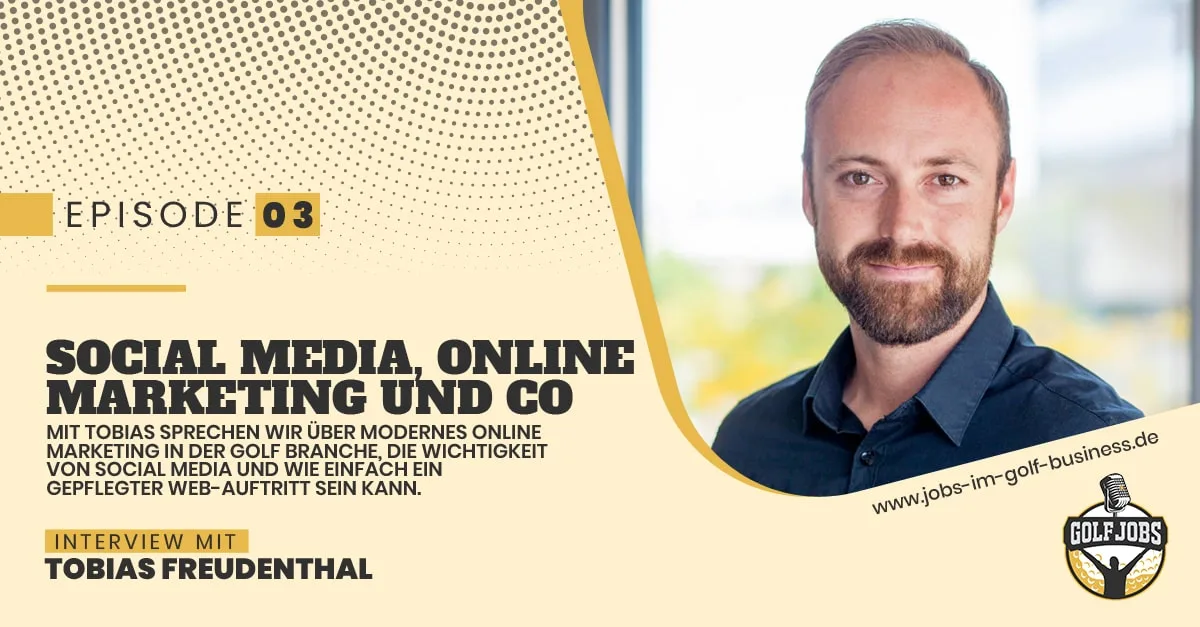
Nobody mapped out Tobias Freudenthal's path into the golf industry. In kindergarten or at school he would never have said that he would one day have something to do with golf. The only connection: on a France holiday on the Atlantic coast he stood at the green and watched the amateurs putting, and at home golf ran alongside the Bundesliga on his parents' Sky subscription. So the sport impressed him early, just from a distance.
Two lines eventually brought him together. His father was a salesperson, first at Radio Köln, later for several magazines, and sold advertising campaigns. Already as a teenager Tobias came along to events, got to know partners and found the creative side interesting early, that became the model for his own commercial path. At the same time he played squash almost professionally. Since you hardly get rich with squash, he went to the German Sport University Cologne and studied sport management and communication. In the fifth semester a supplementary sport had to be chosen that you didn't yet know, and golf at the Cologne Golf Club was on offer. Thanks to the squash background the entry worked immediately, and Freudenthal fell in love with the sport, even if the first attempts on the range, as for most, were quite frustrating.
Via the university's careers page he then came across a trainee position at GolfPost, where he still works today. Before that he had worked in marketing at Lindt & Sprüngli in Aachen, in the chocolate factory, as he says. From the combination of a commercial background and a sporting passion, a profession arose in an industry he would never have imagined as a child.
What is GolfPost?
GolfPost was founded in 2012 by managing director Matthias Gref and publisher Lorenz Gref and became known above all via Facebook. At its core it was for a long time a pure online magazine, entirely without print, even if some partners still ask today when they have to submit something for print. Freudenthal's favourite comparison: anyone who can make nothing of golf but is a football fan knows Kicker.de, and GolfPost is something like Kicker.de for golf. An editorial team reports on everything that moves the sport, from Tiger Woods through the PGA and European Tour to new clubs and the travel area, supplemented by campaigns such as competitions and product tests.
Performance or image campaign?
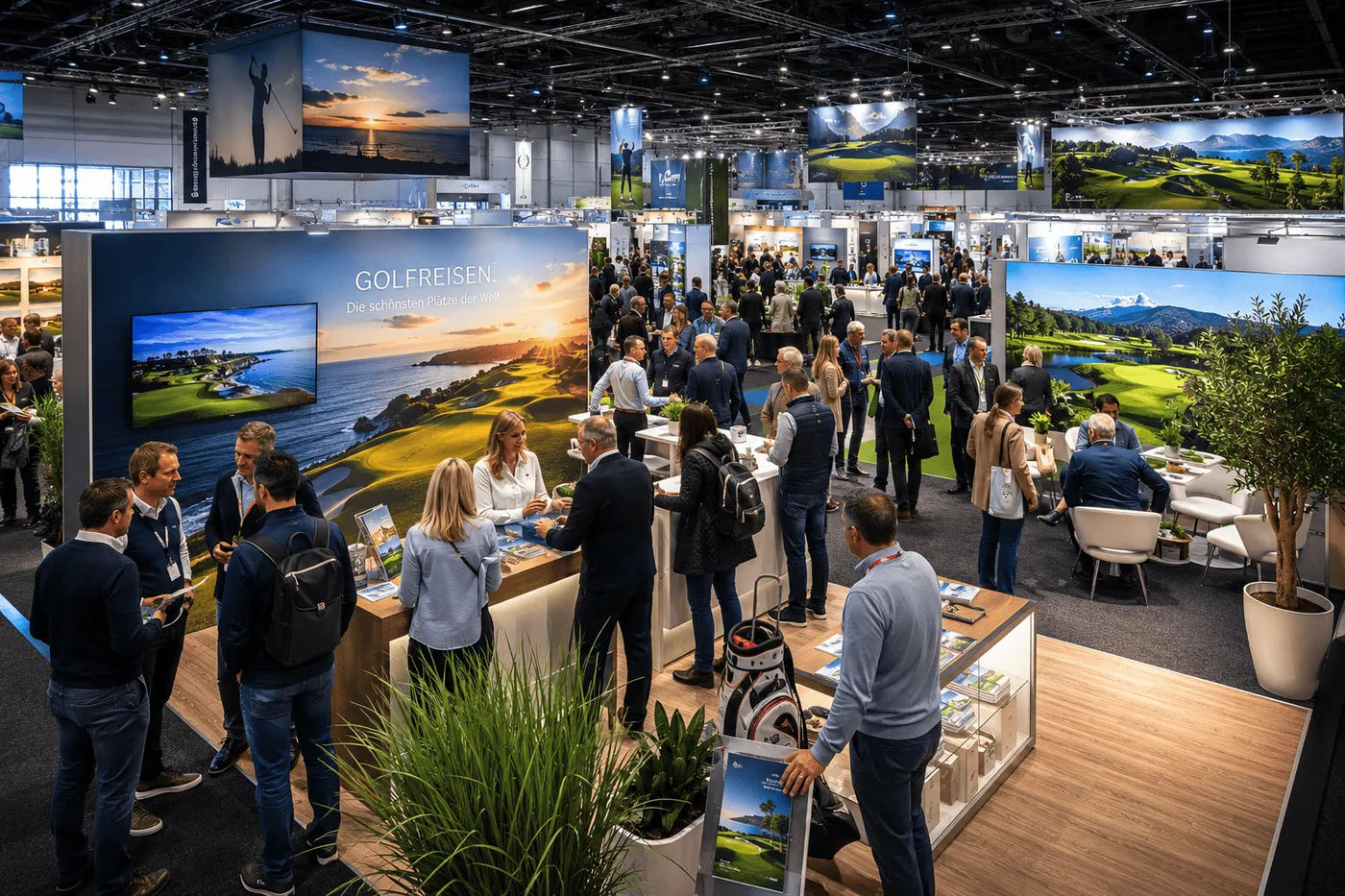
In the team the marketing is split. Two colleagues look after the big manufacturers like TaylorMade, Callaway, Cobra or Puma, Freudenthal himself takes care above all of the travel area: tourism boards, tour operators, travel organisers and direct customers such as golf resorts and hotels. His season starts at the big German golf trade fairs and ends in March at the ITB travel fair in Berlin, with destinations known for golf.
The difference between the campaign types he explains vividly. In a performance campaign, mostly for smaller partners such as a single resort, it is about concrete clicks and ultimately bookings. You integrate an attractive offer and ensure that as many clicks as possible reach the partner's page. An image campaign, by contrast, aims at awareness. His example is an airline that does not expect to sell a thousand tickets immediately after a competition, but wants to stay in mind: a good hub, golf luggage flies free. Big brands from the automotive sector also belong in this category, think of the BMW International Open or the Mercedes Afterwork Tour. The strongest channel here is, in his view, still the newsletter, even ahead of Instagram and Facebook, even though he privately admits to having become a quick deleter of newsletters himself. The target market is the German-speaking region, that is Germany, Austria and Switzerland.
The figures behind the reach
Per month GolfPost reaches, according to Freudenthal, up to 250,000 golfers, with spikes upwards when a Martin Kaymer plays strongly or Tiger Woods celebrates a comeback. On Facebook there are around 55,000 to 60,000 followers, the app has about 20,000 active and in total around 60,000 registered users. The build-up of the app is a longer onboarding process, because anyone who visits the site does not register automatically. For classification: at the German Golf Association a good 600,000 golfers are registered, so GolfPost reaches mathematically over a third. The view has long gone beyond national borders, a large part of the international readers come from the USA, which is why the .com domain was secured and the social-media channels are now run once each in German and English.
From a Facebook group to its own community
When Freudenthal started in 2014, the combination of golf and online still needed a lot of explaining. By 2017 and 2018 at the latest, though, every partner had understood that they have to be active online alongside print. The biggest advantage lies for Freudenthal in the origin. Because GolfPost grew via Facebook, exchange is in the readers' DNA. The goal was never to be only a sender and the readers receivers, but real participation. Instead of selling a partner only a banner, they prefer to do joint product tests: ten readers get a new club, test it and post across all channels, the editorial team makes an article out of it. For two years the GolfPost app has bundled this sense of community, comparable to Facebook or Instagram for golfers, including a heart function and check-in at the golf club. With GolfPost Premium there is also a subscription model that turns readers into real members and further increases the attachment.
The team behind GolfPost
For everyone who wants to work in the golf industry themselves, a look behind the scenes is worthwhile. GolfPost employs around eleven permanent staff, plus numerous freelance authors across Germany and Austria. Alongside marketing and sales there is a dedicated community management, where the phone rings practically continuously, because readers join the competition or product test, ask about the calendar or want a fitting. The editorial team is the actual pillar and researches and publishes everything found on the site. Add a technical team that, with occasional marathon shifts, ensures the platform and app run. The team grows steadily, because with every new project, such as their own tournament series, a whole train of operational tasks arises.
What keeps him up at night
The biggest stomach aches, Freudenthal says with a smile, come rather in the morning. In campaign management he delivers until a campaign goes out, after that he becomes a spectator. Whether it works depends on the partner's content and on the readers' behaviour, and that cannot be forced, even though many partners would, it feels, like to see figures daily. The second challenge is the conveying. It often takes a long time to explain a good idea so compactly that the other side really understands the value of online and good findability on Google. In the end it then often goes: had I grasped that earlier, we would long have done something together.
What golf facilities can learn from GolfPost
- The website must clearly show which offers there are and look attractive, without having been on site
- Take SEO seriously: for searches like "play golf in Cologne" the facility has to be found
- Mobile display is a must, a page not accessible on mobile loses guests
- Learn to act independently, regardless of individual platforms, right up to your own Facebook ad
- Newsletter and community often beat the pure banner business
What golf facilities have to learn today
GolfPost has already given training sessions with up to 40 golf facilities in the Cologne Media Park and put the online craft in their hands. Freudenthal's criticism is clear but constructive: many facilities would have to restructure, build their website more understandably and attractively and be findable in search. Some don't even know how to set up a Facebook ad. His impression especially in Germany: often the rethink only comes when it is almost too late, instead of turning the wheel around in good time. The criticism hits a sore point, because not seldom facilities together with their location cannot be found on Google or their pages are hardly usable on a smartphone.
Many golf facilities try not to let the ship sink, instead of restructuring in good time.
What moved him forward
Asked about his biggest lessons, Freudenthal names something that was strength and weakness at once: approaching people and connecting. He is someone who addresses everyone at trade fairs and is quickly on first-name terms. That has helped him but was also a mistake, because not everyone ticks that way, some conservative counterparts don't want it. His real lesson: to be himself and not to separate the private and the professional too strongly. In his reserved early days at Lindt it was exactly this restraint that held him back and led to limited results. His closing appeal fits with that: open up to new things, connect the old and new world, don't play print and online off against each other, and communicate golf confidently and broadly positioned to the outside.
Conclusion
Freudenthal's story shows two things. First, the career change into the golf industry is doable if the marketing craft is right, the golf origin is secondary. Second, digital reach is no longer a nice-to-have for golf facilities but a must. Anyone who sets up the website clearly, fast and findable, takes community seriously and connects new with proven ways, communicates the sport confidently to the outside instead of withdrawing.