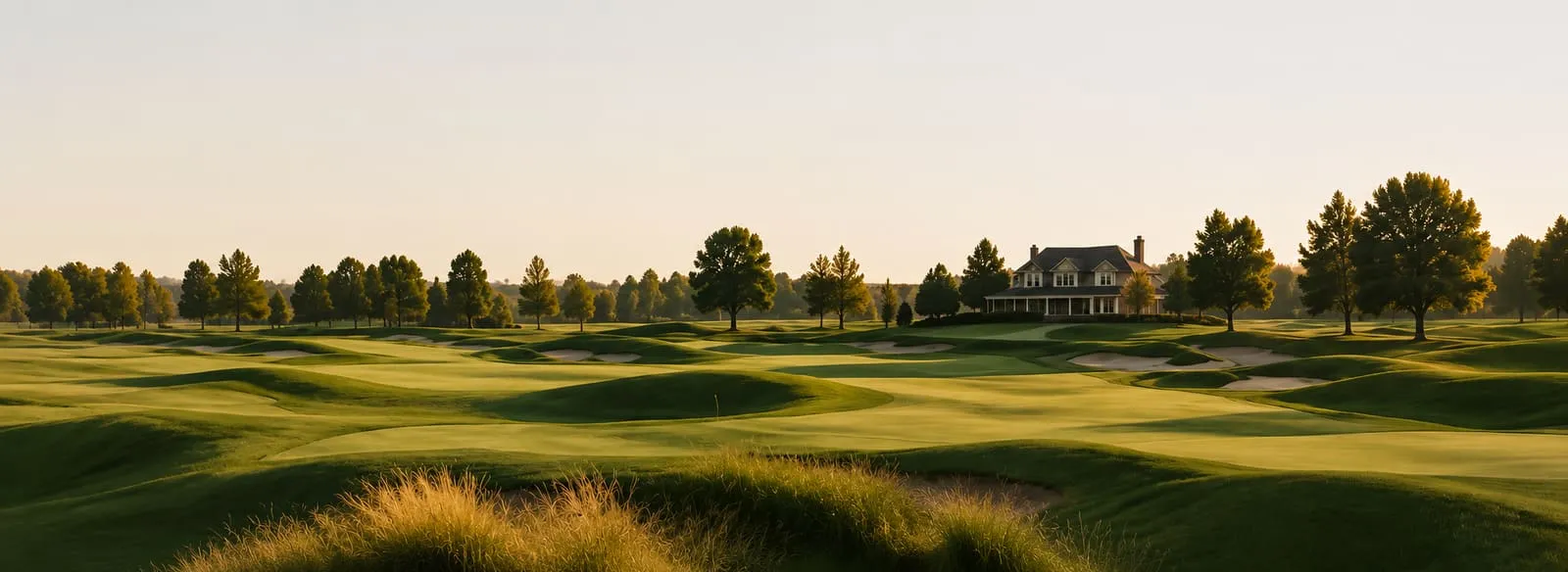
From the outside, golf looks like calm and well-kept green. Behind the scenes, however, a golf facility is above all one thing: a business with high fixed costs, strong seasonality and a market that barely grows in Germany any more. That is exactly why the economics decide whether a beautiful facility also becomes a healthy company. In this overview I show you what the cost structure looks like, where the money comes from, how you plan and finance and which levers you have to operate viably in the long run.
The essentials up front
- Course maintenance and staff are the two biggest cost blocks and largely fixed.
- The income follows the season, the costs run all year, which you have to cushion through liquidity.
- A robust forecast is more important than the annual accounts, because it lets you steer before things get tight.
- The financing is a mix of equity and debt, often supplemented by member or playing-right models.
- Outsource or do in-house is a deliberate decision per service, not a matter of faith.
The cost structure of a golf facility
Anyone who wants to understand a golf facility economically looks first at the cost side. It is astonishingly stable and largely fixed. That means: whether five or five hundred players come on a given day changes little about many costs at first.
Course maintenance as the biggest item
Greenkeeping is the heart and at the same time the most expensive area. An 18-hole facility has to be kept at playing level over the entire season, and the green is the most valuable asset of all. This block includes, among other things:
- the machine fleet (mowers, aerators, maintenance equipment) including servicing, depreciation and replacement,
- seed, fertiliser, plant protection and sand for ongoing maintenance,
- irrigation with technology, pumps and water costs,
- the fuel and energy for the maintenance operation.
Greenkeeping is not something you can permanently save on without the guest immediately noticing it in the course condition. That is exactly why it is so cost-relevant.
Staff as the second big block
Right next to it stands the staff. A facility needs greenkeepers, administration, office and pro shop, plus, depending on the concept, marshalling, food and beverage and a coaching area. In the interview with Tim Steffens this becomes tangible: his greenkeeping consists of five permanent employees plus a seasonal worker, in administration, pro shop and office three employees work, plus several marginally employed staff. Staff is expensive, hard to adjust at short notice and decisive in quality for what the guest experiences.
Water, energy and administration
Three further items belong in every calculation:
- Water for the irrigation, whose importance tends to rise with dry summers,
- Energy for clubhouse, workshop, machines and watering,
- Administration and overhead, that is insurance, IT, marketing, accounting, fees and leases.
Income, expenses and seasonality
On the income side stand, depending on the concept, membership fees, green fees, pro shop, food and beverage, training operations, events and rental. A pure members' facility plans differently from a public facility that lives strongly on green fees. Both models share a basic problem, however: seasonality.
The costs run all year. Maintenance, staff and capital service don't pause in winter. The income, by contrast, concentrates on the playing season, in our latitudes roughly from spring into autumn. This scissor gap between year-round costs and seasonal income is the central economic challenge of every facility.
Add the market environment. The German golf market barely grows, and many facilities lose older members faster than new blood comes up. Anyone planning should therefore not assume growth as a matter of course, but a market in which you have to earn every membership and every green-fee guest.
Planning, forecast and liquidity
The annual accounts tell you how it went. You can no longer steer anything with them. That is why the forecast is the more important tool: a rolling preview of income, expenses and above all liquidity.
Three levels belong together:
- the result planning (what is left at the end of the year),
- the investment planning (machines, irrigation, construction, bigger repairs),
- the liquidity planning (is there enough money in the account at every point in time).
The liquidity in particular is tricky at a golf facility, because many revenues come early in the year, such as annual fees, while costs arise evenly across the year. Anyone who has already spent the money from spring by summer gets into trouble in winter, even though the facility is profitable over the year.
Financing: equity and debt
A golf facility is capital-intensive. Land acquisition or lease, construction, irrigation and the machine fleet tie up a lot of money before the first green fee is paid. The financing is therefore almost always a mix.
- Equity of the operators or shareholders is the basis. It lowers the risk and creates trust with the banks.
- Debt via banks finances large investments that run over many years. Here the decisive question is whether the facility can permanently earn the capital service, that is interest and repayment, from operations.
- Member and playing-right models are a peculiarity of the industry. Some facilities have pre-financed in the past via long-term playing rights with a one-off payment. That can work but is no sure thing, in the Steffens interview it is openly recounted that exactly such a concept initially did not work out and had to be changed.
In addition there are, depending on location, sponsor and project, general subsidies, for example for investments in energy efficiency, renewable energies or regional structures. Which programmes come into question depends strongly on the individual case and should be checked early with tax advice and the house bank. What matters is the sober view: a subsidy improves a viable calculation, it does not save one that does not work without it.
Outsource or do in-house
One of the most important economic decisions is: which service do you provide yourself, and which do you hand over? That is not a question of right or wrong but a weighing of costs, quality, risk and control.
Food and beverage
Food and beverage is the classic. Running it yourself gives you full control over quality and guest experience but ties up capital, staff and attention in a business with its own rules. Leasing shifts the risk and the special competence to a caterer but costs you part of the margin and a piece of control. Many facilities fare well concentrating on golf and putting the food and beverage in experienced hands, as long as the quality is right, because in the end it falls back on the facility.
Greenkeeping
With greenkeeping the situation is different. So much value and so much facility-specific knowledge sit here that most operators deliberately keep it in their own team. Their own well-trained greenkeeping secures quality and speed of reaction. What gets outsourced is rather individual peaks or specialist work, such as larger earthworks or certain maintenance measures for which their own machines don't pay off.
Quality management
Viability and quality are not opposites, they are directly connected. A golf facility sells an experience: a well-kept course, friendly service, smooth processes. Where the quality slips, guests are lost, and lost guests are expensive in a stagnating market.
Quality management here means, very practically: defined standards for course maintenance, clear processes at reception and pro shop, well-kept etiquette to protect the course and a sober look at complaints and utilisation. Anyone who systematically tracks metrics such as green-fee volume, member development, utilisation and recommendation recognises problems early and can steer against them before they hit the result. Quality management is thus less a folder of files than an attitude: measure, compare, improve.
Insurance at a glance
A golf facility carries typical business risks and some peculiarities. A sliced ball, an overturning buggy, a storm overnight, all of that wants to be covered. The standard framework usually includes:
- the business liability for damage to third parties,
- property and building insurance for clubhouse, workshop and technology,
- the protection of the machine fleet,
- cover around staff and operational obligations.
Insurance is an ongoing cost block in administration but belongs to the risk provision of a viable business. Which policies are sensible in detail, and partly also legally necessary, I go deeper into in the dedicated topic law and insurance at the golf facility.
Frequently asked questions
What is the biggest cost block of a golf facility?
As a rule, course maintenance and staff. Both are largely fixed and decide at the same time the quality the guest experiences. There is only limited room to save on them without it becoming immediately visible.
How do you deal with seasonality?
Through planning and liquidity. The costs run all year, the income concentrates on the season. A monthly liquidity plan and sufficient buffer ensure that the income-strong months carry the weak ones.
Is it worth running the food and beverage yourself?
That depends on the concept. Running it yourself brings control and margin but ties up capital and attention. Leasing shifts risk and special competence. What matters is that the quality is right, because it falls back on the whole facility.
How do you finance a golf facility?
Through a mix of equity and debt, often supplemented by member or playing-right models and, depending on the project, general subsidies. What is decisive is whether the business can permanently earn the capital service itself.